

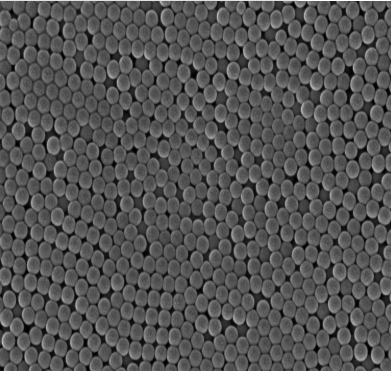
Details
2 Product Features
· Fast magnetic response and excellent monodispersity
· Low batch-to-batch variation and high reproducibility
· Good biocompatibility and low cytotoxicity
· Convenient for conjugation with diverse biomolecules; simple operation
3 Product Specifications
· Particle size: 1 μm
· Concentration: 50 mg/mL
· Storage solution: Isopropanol
· Ligand: Maleimide (MAL)
· Ligand density: 200–300 μmol/g
· Storage condition: -20 °C
· Iron (Fe) content: 30%
4 Protocol
Take an appropriate amount of magnetic beads and wash several times with 10 mM PBS buffer (pH 7.4). Dispense the desired biomolecule in 10 mM PBS buffer (pH 7.4), then resuspend the beads in this biomolecule solution. Perform conjugation at 37 °C for 2 hours, or at 4 °C overnight.
After conjugation, collect the beads by magnetic separation and discard the supernatant. Add 10 mM PBS buffer (pH 7.4) containing cysteine to resuspend the beads, and incubate at 25 °C for 1 hour to quench unreacted MAL groups.
Following blocking, magnetically separate the beads and remove the supernatant. Wash the beads 3 times with 10 mM PBS buffer (pH 7.4), resuspend them, and store at 4 °C for later use. 0.02% sodium azide may be added if needed to inhibit bacterial growth.
5 Notes
· The beads have a relatively high density and tend to settle during prolonged standing. Vortex thoroughly before use to obtain a homogeneous bead suspension.
· The conjugation buffer must be free of sulfhydryl (-SH)-containing compounds, otherwise the conjugation efficiency will be compromised.
· Alternative -SH-containing reagents can be used for blocking according to experimental requirements.
· Ensure that neither the target conjugate nor its dissolution buffer contains sulfhydryl-containing substances prior to conjugation, as these substances will compete with the target molecule for binding sites.
Special Warning: The disulfide reducing agent TCEP must also be removed before conjugation


